The Problem That Keeps Reappearing
Canonicalization problems are unusual in that they're both common and invisible. A site can have serious duplicate content issues for months without any visible error, any broken page, or any obvious signal that something is wrong. Traffic just slowly drifts. Rankings that seemed stable start to soften. Content that should rank doesn't.
The diagnosis is rarely obvious. Most site owners look at content quality, backlinks, page speed. Canonical issues tend to be discovered late, often by accident, usually after the damage is already done.
This publication exists because the existing writing on this subject falls into two categories: oversimplified tutorials that treat canonical tags as a simple checkbox, and deeply technical documentation that assumes a level of familiarity most site owners don't have. Neither is particularly useful when you're looking at a site and trying to figure out what's actually happening.
What "Real-World Disasters" Actually Means
Every article here is built around a pattern observed in real sites. Not a hypothetical. Not a toy example. A pattern that appeared in an actual crawl, an actual Search Console report, an actual conversation about why a site's traffic dropped.

The specific site names aren't mentioned. The patterns are. And the patterns repeat with remarkable consistency across different industries, different platforms, and different team sizes. The www versus non-www problem appears on enterprise sites managed by large agencies. Faceted navigation index bloat appears on small Shopify stores and large Magento installations alike. The canonical tag that points to a redirect chain appears everywhere.
Naming the patterns precisely is more useful than naming the sites.
The www vs. Non-www Problem in Detail
This should have been a solved problem by 2015. It wasn't. It still appears in 2026 on newly launched sites, on sites that migrated platforms, and on sites that changed hosting providers and didn't carry over their redirect configuration.
What happens is straightforward. Google discovers both https://www.example.com/page/ and https://example.com/page/. Without a 301 redirect consolidating them, both URLs are crawlable. Both may accumulate links. Both may appear in the index. Google has to choose which one is canonical, and it may not choose the one you prefer.
The fix is a permanent redirect from one version to the other, combined with a canonical tag on every page pointing to the preferred version, combined with consistent internal linking to the preferred version. All three. Not just one.
The reason all three matter is that Google weighs signals. A canonical tag pointing to the www version while internal links point to the non-www version sends contradictory signals. Google may still choose correctly, but you're making it harder than it needs to be, and in competitive niches, that extra friction matters.
Faceted Navigation: The Scale Problem
E-commerce platforms generate URLs from filter combinations. A catalog with 50 colors, 8 sizes, and 12 brands can mathematically produce tens of thousands of unique filter combination URLs. In practice, most of those URLs are nearly identical pages with minor variations in the product list shown.
Search engines crawl them. They may index them. Crawl budget gets consumed by pages that offer no meaningful search value. The pages that do offer value, the category pages and product pages, get crawled less frequently because the budget is exhausted on filter combination pages.
The solutions range from noindex directives on filter pages, to robots.txt disallow rules for URL patterns, to canonical tags on filter pages pointing to the base category page, to parameter handling in Google Search Console. Each approach has tradeoffs. The noindex approach is simple but means those pages don't pass link equity. The canonical approach is more nuanced and requires careful implementation to actually work.
The Free Audit Methodology
The 20-minute audit described in this publication uses four things: Google Search Console, the free tier of Screaming Frog (which crawls up to 500 URLs), your browser's developer tools, and the URL Inspection tool in Search Console.
The sequence matters. Start with Search Console's Coverage report to understand what Google has indexed and what it's excluded. Look specifically for pages marked as "Duplicate, Google chose different canonical than user" — this tells you directly where your canonical signals are being overridden. Then use Screaming Frog to crawl your site and export the canonical tag data. Compare what you said the canonical should be with what Google actually indexed as canonical.
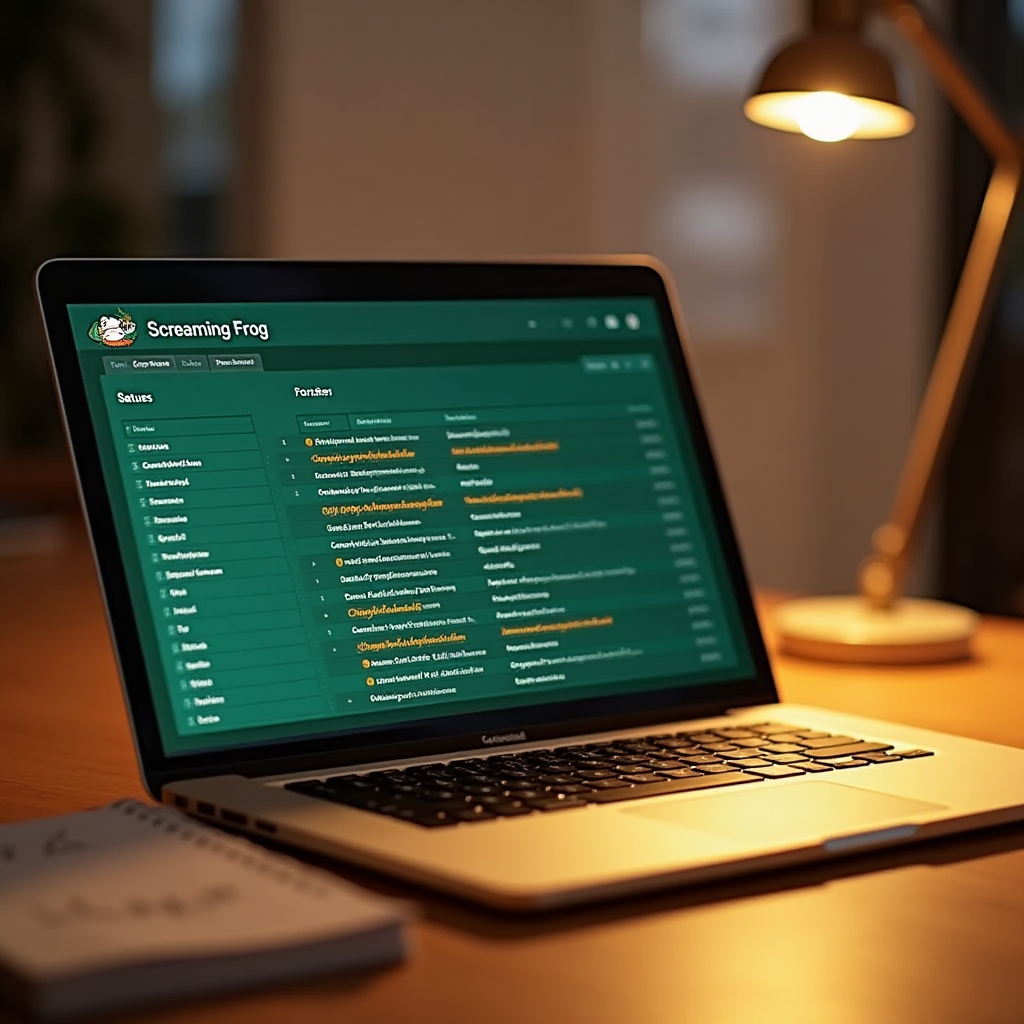
The gap between those two things is where the problems live.
What This Blog Is Not
It's not a comprehensive SEO guide. It doesn't cover content strategy, link building, or page speed optimization. Those are important subjects with excellent resources elsewhere. This publication has one lane and stays in it.
It's also not a tool recommendation service. The tools mentioned here are mentioned because they're useful for this specific problem, not because of any commercial relationship. When a paid tool does something the free alternatives don't, that gets noted honestly alongside the free alternatives.
The goal is to be genuinely useful to the person who is responsible for a site and has just discovered, or suspects, that their URL structure is working against them.